Training & Education
Anatomy
Clinical understanding for accurate documentation interpretation
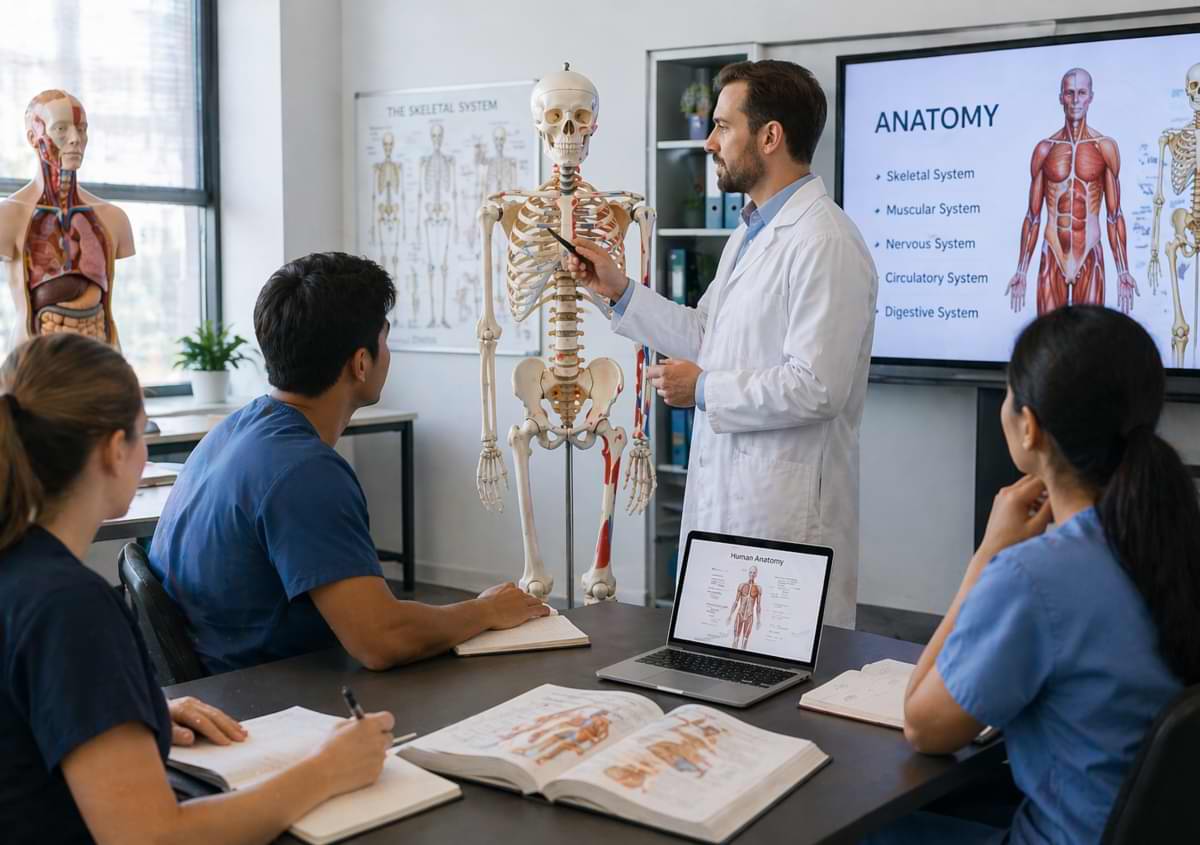
The Anatomy course provides essential clinical knowledge that helps new coders, billers, and auditors interpret healthcare documentation with accuracy. Students learn the structure and function of each body system, how conditions affect those systems, and how common procedures relate to specific anatomical regions. This foundation is critical for understanding procedure descriptions, surgical summaries, diagnostic terminology, and provider notes. By understanding the clinical context behind diagnoses and procedures, learners gain confidence in interpreting complex terminology and assigning accurate, compliant codes that reflect true clinical intent.
Medical Terminology
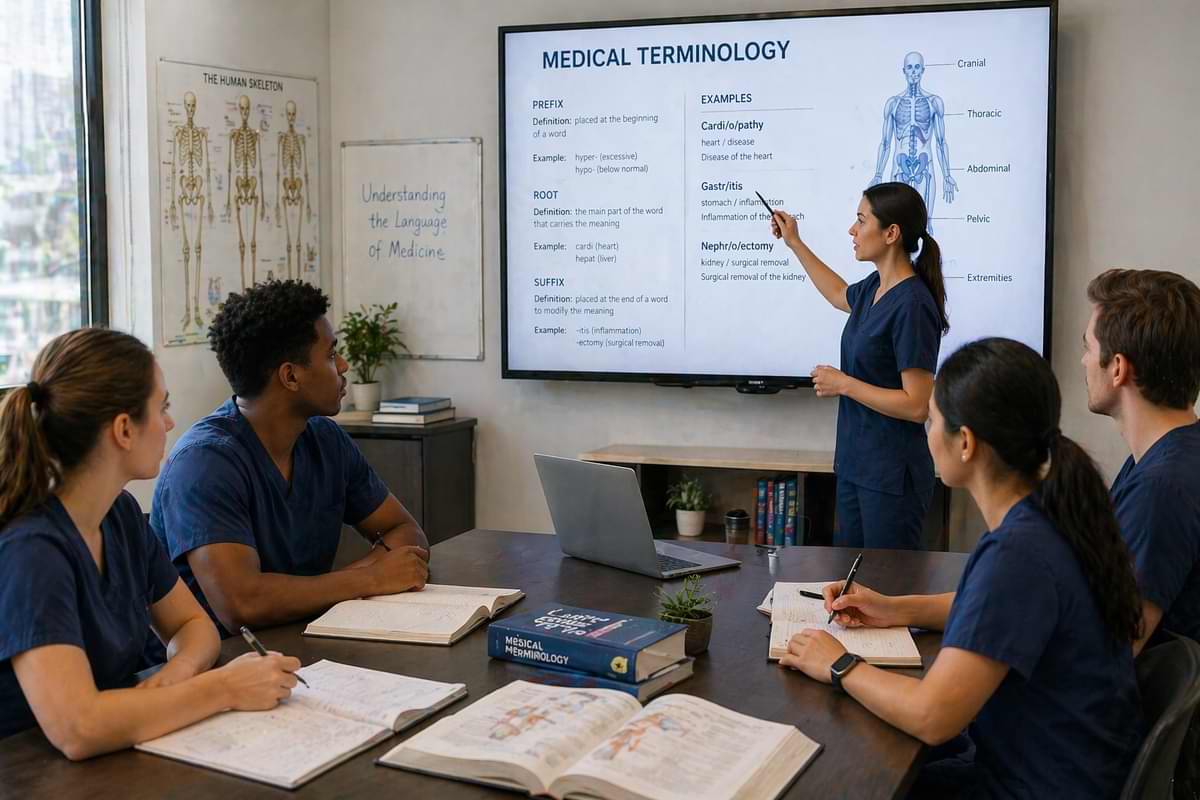
The Medical Terminology course teaches students how to interpret the language used throughout healthcare documentation, including provider notes, procedure descriptions, surgical summaries, and diagnostic reports. Learners study root words, prefixes, suffixes, abbreviations, and clinical phrasing commonly found in medical settings. This foundation is essential for identifying diagnoses, procedures, anatomical references, and treatment details. By mastering medical terminology, new coders and billers gain the ability to understand complex documentation accurately, assign correct codes, and support clean claim submission—reducing errors and strengthening overall revenue cycle performance.
Medical Coding Training
CPC- Cerified Professional Coding Certification preperation
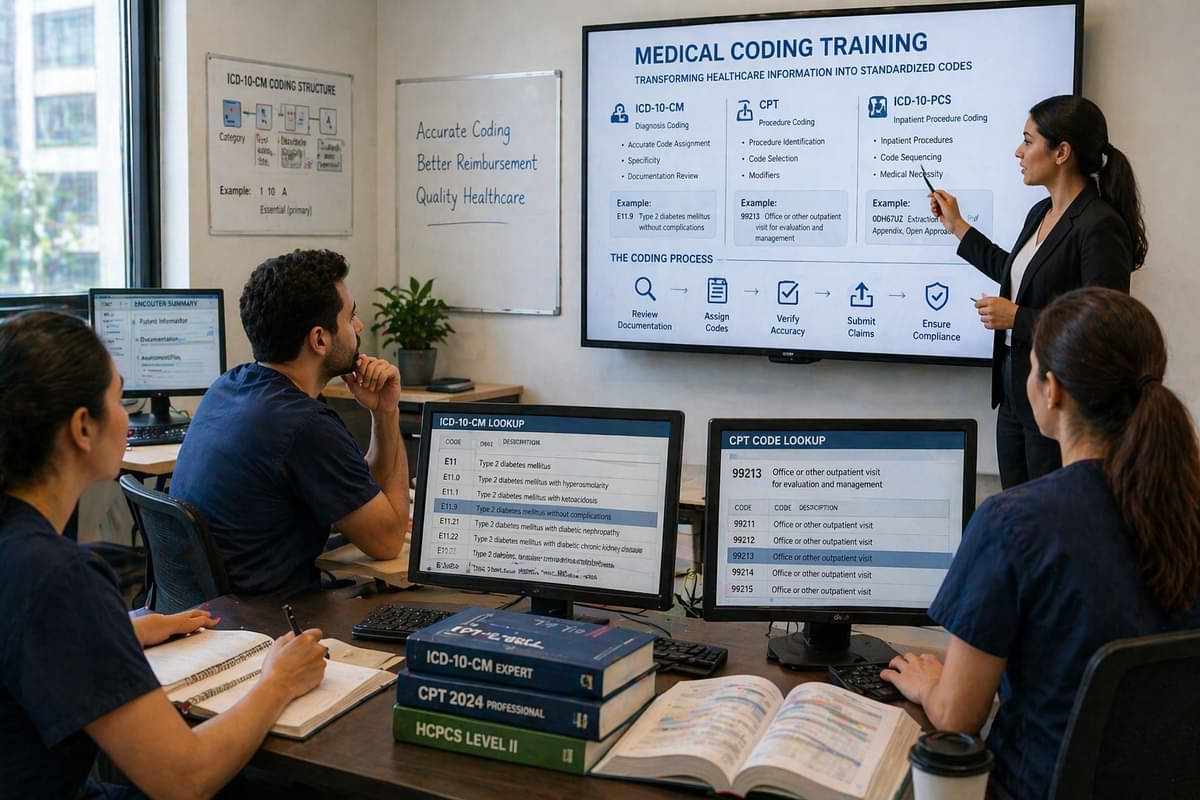
The Medical Coding program provides comprehensive training in ICD‑10‑CM, CPT, and HCPCS coding with a strong focus on interpreting clinical documentation. Students learn to analyze provider notes, procedure descriptions, surgical summaries, diagnostic terminology, and treatment details to determine accurate code selection. The course covers E/M guidelines, modifier usage, global periods, bundling rules, and documentation requirements. Through structured coding exercises and mock scenarios, learners practice identifying medical necessity, sequencing diagnoses, and coding complex procedures. A strong emphasis is placed on understanding clinical concepts such as disease progression, surgical intent, and procedural components.
Medical Billing Training
CPB- Cerified Professional Biller Certification preperation
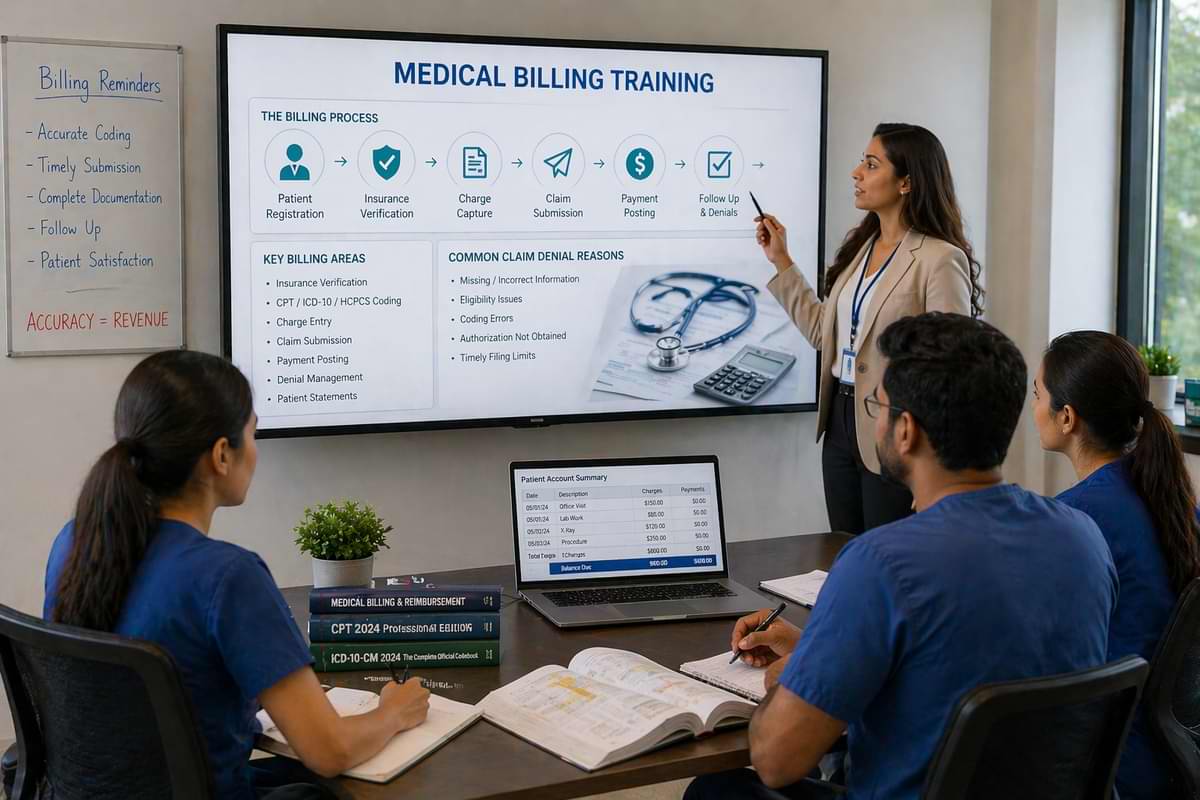
The Medical Billing program teaches students how to manage the full revenue cycle while understanding the documentation that supports accurate billing. Learners study patient registration, insurance verification, charge entry, claim submission, payment posting, and denial resolution. A major focus is reviewing structured clinical information to ensure procedure and diagnosis coding aligns with documentation before claims are submitted. Students learn payer rules, billing guidelines, Explanation of Benefits and how to complete CMS‑1500 and UB‑04 claim forms. This program builds the skills needed to support clean claims, reduce rejections, and maintain compliant, efficient billing operations.
Medical Auditing Training
Certified Professional Medical Auditor (CPMA) certiication preperation
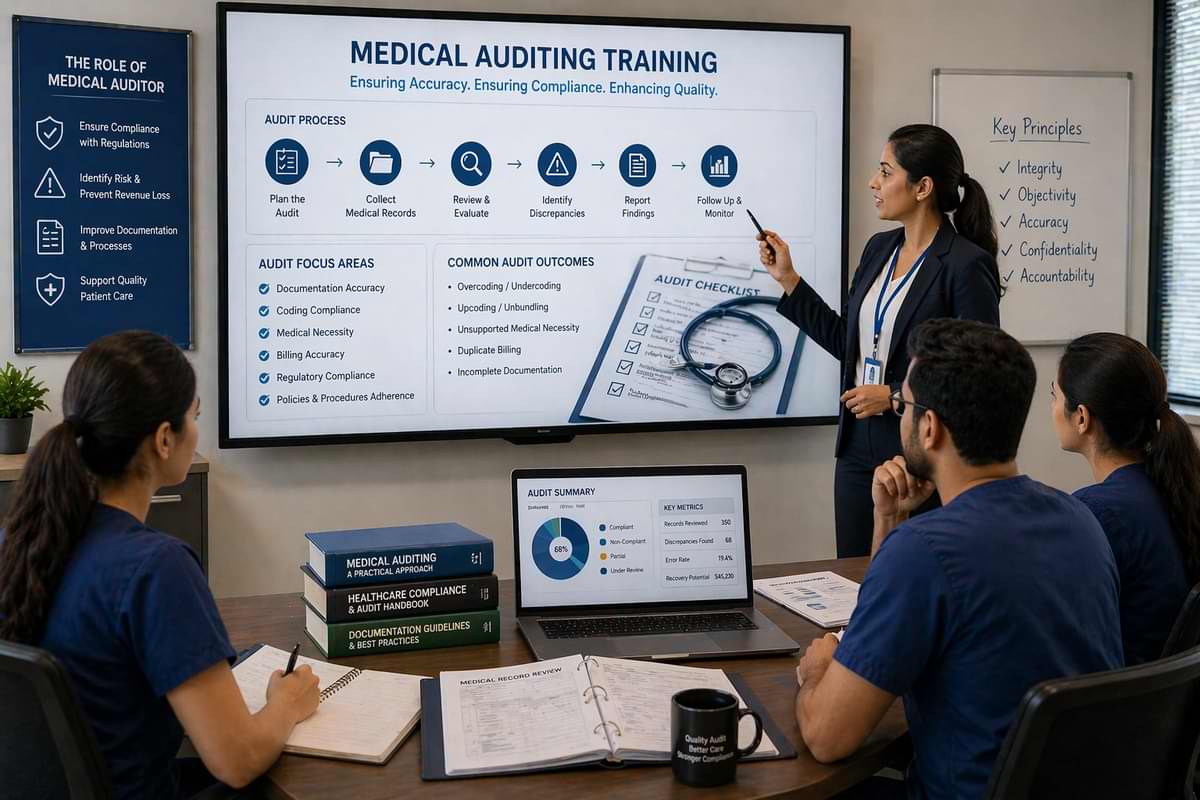
The Medical Auditing program trains students to evaluate healthcare documentation for coding accuracy, completeness, and compliance with industry guidelines. Learners study audit methodologies, risk areas, E/M validation, modifier accuracy, and medical necessity requirements. The course includes structured review of provider notes, procedure descriptions, surgical summaries, and diagnostic terminology to identify discrepancies, missed codes, and compliance concerns. Students learn how to analyze patterns, calculate error rates, and prepare audit findings that support corrective action. A strong emphasis is placed on understanding clinical concepts, procedural intent, and documentation structure to ensure accurate interpretation. Graduates gain the skills needed to strengthen revenue integrity, reduce compliance risk, and support continuous improvement across coding and billing teams.